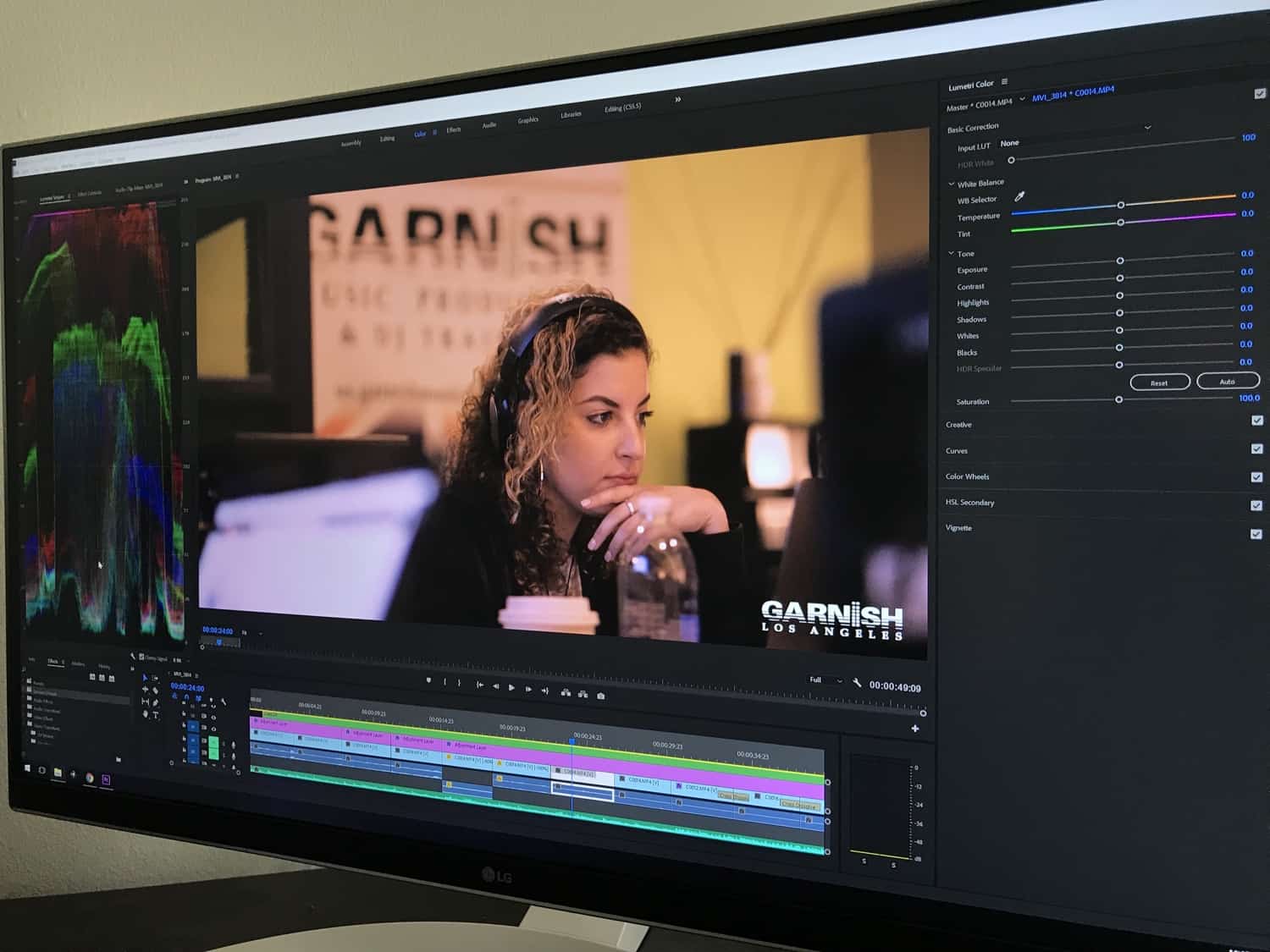
Video Production Course | Tokyo
- →Location Scouting
- →Scripting/Script Writing
- →Storyboarding
- →Sensor Size and Crop Factor
- →Exposure Triangle and Achieving Proper Exposure
- →Shutter Speed and Frame Rates
- →Compressed Codecs vs Raw Video
- →Bit Rates and Color Spacing
- →F-stop/Aperture
- →Focal Length
- →Primes vs Zooms
- →Using Different Filters(ND/UV)
- →Importing Footage and Creating New Sequences
- →Use of Tools in Timeline
- →Color Grading and Visual Effects
- →Organizing Footage
- →Working with Proxies
- →Understand Different Codecs
- →Export Setting for Different Audiences/Channels
What our students say.
“It was really useful to fully understand the principles after all this time. I highly recommend Garnish”
Mark Jenkyns
Instructors



Questions we hear a lot.
Yes - understanding codecs and export settings for different audiences and channels is part of the editing module.
Sensor size, exposure, shutter speed and frame rates, codecs, bit rates, lenses, aperture and filters.
Yes - pre-production is covered too, including location scouting, scripting and storyboarding.
Primarily Adobe Premiere CC, though Final Cut users can take the course too if they already understand the basics of non-linear editing.
18 hours, available in-person or Live Online.
36 Hours | In-Person: ¥500,000 | Live Online also available
Ready to get started?
InquireWhat makes Garnish different?
Mixing: The Short Version
The whole mixing process, condensed: zeroing the desk, subgrouping, panning, using your ears, and where ambience fits in.
Read →Choosing Monitors
Setting up your Monitors and your room – What are the different types of monitors? – How should your monitors be positioned? – Getting the best acoustics…
Read →Mixing in Dolby Atmos
Not surround sound and not more speakers - a different way of describing where a sound is. Beds and objects, the room you probably do not have, why the loudness war was never possible in Atmos, what changes about mixing and what does not, and how to deliver it.
Read →Basic panning techniques
The term stereo, short for stereophonic, involves the reproduction of sound using two separate audio channels that are then presented to a pair of…
Read →Modulation Effects
Beyond chorus and phasing: ring modulators, frequency shifters, Leslie cabinet simulation and auto-panners, and where each one belongs.
Read →Dynamics
How compression works - attack, release, knee and look-ahead - plus noise gates and limiting, and what each is actually for.
Read →