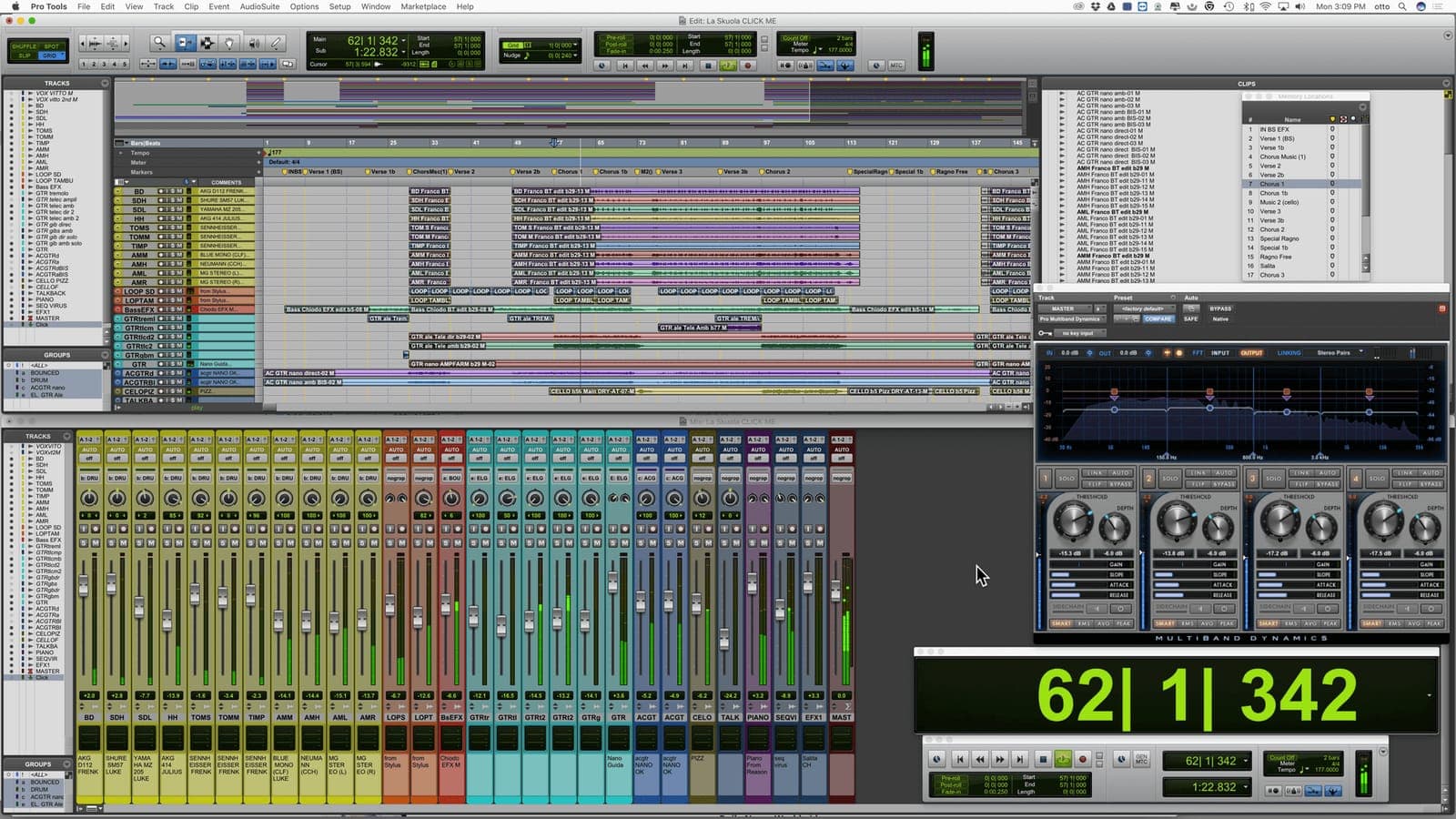
Pro Tools Course | Tokyo
Pro Tools Course | Tokyo
- →Successfully perform basic editing, including selecting and navigating around the relevant windows
- →Import audio &video into sessions
- →Perform basic mixing and apply routing concepts to sessions
- →Diligently deliver and perform backup of work
- →Create, set up and successfully configure Pro Tools session/Project
- →Set up and capture/record both audio & MIDI information
36 Hours | In-Person: ¥500,000 | Online Remote Attendance also available
Enter your schedule preferences by clicking below and we will match you up with the perfect class!
Getting Started
- →Software installation, toolkits, iLoks & licenses
- →Avid hardware and other compatible interfaces
- →Launching Pro Tools & session start up
- →File format, bit depth & sampling rate tips
- →Pro Tools file structure and file management
- →Edit & mix window introductions
Advanced Editing Techniques
- →Clip based gain and automation
- →Pencil tool, TCE (Time Compression Expansion Tool)
- →Strip silence and tab to transient and consolidating clips
- →Repeating and duplicating clips
- →MONO, stereo and panning
- →Overview and automation for plugins and effects
Workflow
- →Edit window orientation
- →Importing audio, creating and track arranging tips
- →Edit modes - all about Slip, Spot, Shuffle & Grid
- →Multi-tool (Trimmer, Grabber, Selector)
- →Transport window - tempo, pre & post roll count off
- →Grid and nudge values
Recording Techniques and Introduction to Sound Design
- →Balancing, introduction to the art of mixing. Group tracks and advanced uses of routing
- →Introduction to sound waves, frequency, and amplitude
- →The recording patch in detail, introduction to gain structure
- →EQ and compression for recording
- →Foldback, headphone mixes, and latency
- →Digital, analog, sampling rate and bit-rate explained
- →Microphones overview and stereo miking techniques
- →Recording specific aspects of Ableton
- →Compiling audio takes
Samples & Loops
- →Creating drum loops in Pro Tools
- →MIDI controllers and editing MIDI
- →Printing software Instruments
- →Master Fader, VU and peak meters
- →Beat Detective - time correct live drums
- →Exporting audio, bouncing mixes and dithering
The Final Product
- →Preparing your session for mix-down
- →Consolidating audio and cleaning up your session
- →Exporting MP3s and Editing METADATA
- →Mixing techniques for post production, including film & TV
- →Key command shortcuts’ review
- →0dbfs and digital clipping
Testimonials
In Tokyo this course is taught in small groups by working producers, with classes at our studio and a live-online option for students elsewhere in Japan, using our specialist music collaboration software, Muse. The syllabus is the one taught across the whole Garnish network. Discover qualities that distinguish us, here.
What our students say.
“The instructor was great. He was extremely good at explaining things and always gave us enough time to put what we were learning into practice. Most importantly, he is passionate about music and actually enjoys teaching which really makes the whole experience very enjoyable.”
Reggie Chelsom
Instructors



Questions we hear a lot.
Click through to request the schedule, or enter your preferences and we'll match you with a suitable class.
Audio engineers, producers, songwriters and composers who want to take a track from an empty session to a finished, delivered mix.
36 hours, available in-person or via online remote attendance.
Both - you'll record and edit MIDI alongside digital audio, then mix everything together using plug-ins.
No - it starts with fundamentals and works up to more advanced techniques.
36 Hours | In-Person: ¥500,000 | Online Remote Attendance also available
Ready to get started?
InquireWhat makes Garnish different?
What Are MIDI Interfaces?
All about MIDI The MIDI (Musical Instrument Digital Interface) standard has had a profound impact on the music industry since its introduction in the early 1980s. MIDI allows electronic musical instruments, computers, and other digital equipment to communicate with each other, allowing for the creat
Read →DIY Home Recording Studio Tips
As early as 2010, if you wanted to put together an album you were pretty much forced to shell out cash to a local recording studio. Or, even worse, you pretty much needed a record deal with a label of some sort.
Read →Microphone Polar Patterns for Beginners
by Katie Gilchrest Understanding how microphones “hear” is the first step in learning how to mic instruments properly. The directionality of a microphone is commonly explained as a polar pattern, and microphone use in the studio, as well as live settings vary based on each one. Understanding microph
Read →Signal Flow
Channel level is another important aspect of mixing, which begins to flesh itself out during the EQ’ing process. As each new element is introduced for…
Read →Mixing Desk Basics
Subgrouping a mix, using reference tracks properly, and keeping your monitoring level honest over a long session.
Read →Audio Interfaces
Audio Interfaces An audio interface is a piece of hardware that connects musical instruments, microphones, and other sound sources to a computer. The audio interface acts as a bridge between the analog audio signals from the instruments and the digital signals that the computer can understand and pr
Read →